

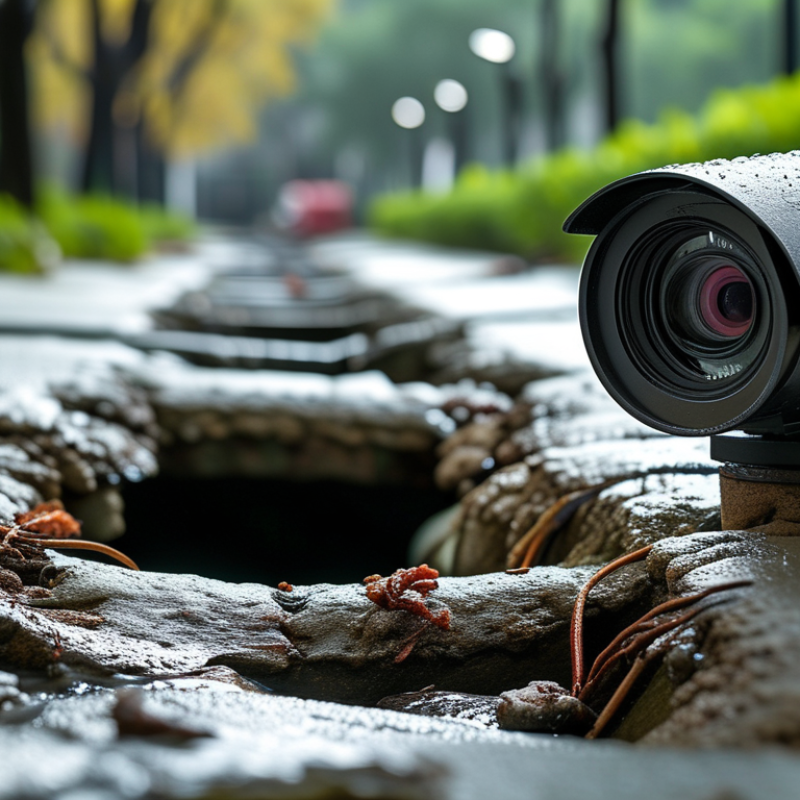
China’s sewer camera market offers several practical types for sale. Push-rod cameras are common for household drains, branch lines, and short commercial pipes. Their flexible cable travels through bends while the camera sends live images to a handheld monitor. They are compact, affordable, and easy for one technician to operate.
Self-leveling cameras keep the image upright inside the pipe. This helps operators read cracks, offset joints, and connection points more accurately. Pan-and-tilt cameras provide a wider inspection range and can examine pipe walls from different angles. For large municipal pipelines, tractor-mounted cameras move steadily over long distances. Some systems also include distance counters, strong lighting, and recording functions. The details matter.
Portable reel cameras suit quick maintenance work, especially where access is limited. Waterproof inspection cameras can enter narrow pipes, floor drains, and difficult corners. However, “waterproof” does not always mean suitable for every depth or pressure. Buyers should check the rated protection level, cable length, camera diameter, and lighting performance. A bright image can still hide defects when grease covers the lens.
In practical inspections, a stable cable often matters more than a high-resolution screen. Operators should test turning control, image delay, battery life, and file export before purchasing. Service access and spare parts also deserve attention. No camera is perfect. I would compare recorded footage from several pipe sizes, because showroom results can look better than field performance.