What Are the Best Stainless Steel Fabricators in China?

Choosing the best stainless steel fabricators in China requires more than comparing prices or browsing polished websites. The right partner must turn drawings into consistent, traceable, and durable components. This matters for kitchen equipment, architectural panels, pressure-related assemblies, medical fixtures, and industrial machinery.

A reliable evaluation begins with manufacturing capability. Check the fabricator’s experience with stainless steel grades, sheet thicknesses, welding methods, surface finishes, and tolerance control. Ask how operators prevent contamination between carbon steel and stainless steel. Inspect whether laser cutting, CNC bending, TIG welding, polishing, and passivation are handled under controlled procedures. Clear inspection records are valuable. So are material certificates, weld documentation, dimensional reports, and photographs from real production lines.

Not every large factory is the best choice. A smaller supplier may offer stronger communication and closer project attention. A larger one may provide broader equipment and higher capacity. Neither assumption is always correct. Request samples before approving mass production. Compare edge quality, weld appearance, flatness, protective packaging, and response speed. Confirm export experience, production lead times, quality responsibilities, and applicable certifications with independent evidence.

This guide examines respected stainless steel fabricators in China through practical sourcing criteria. It considers engineering support, factory resources, quality systems, customization ability, communication, and long-term reliability. However, rankings can never replace an audit. Requirements differ. The most suitable fabricator is the one that understands your drawings, documents its process, and consistently meets your acceptance standards. Mistakes can still happen, so transparent corrective action deserves serious attention.
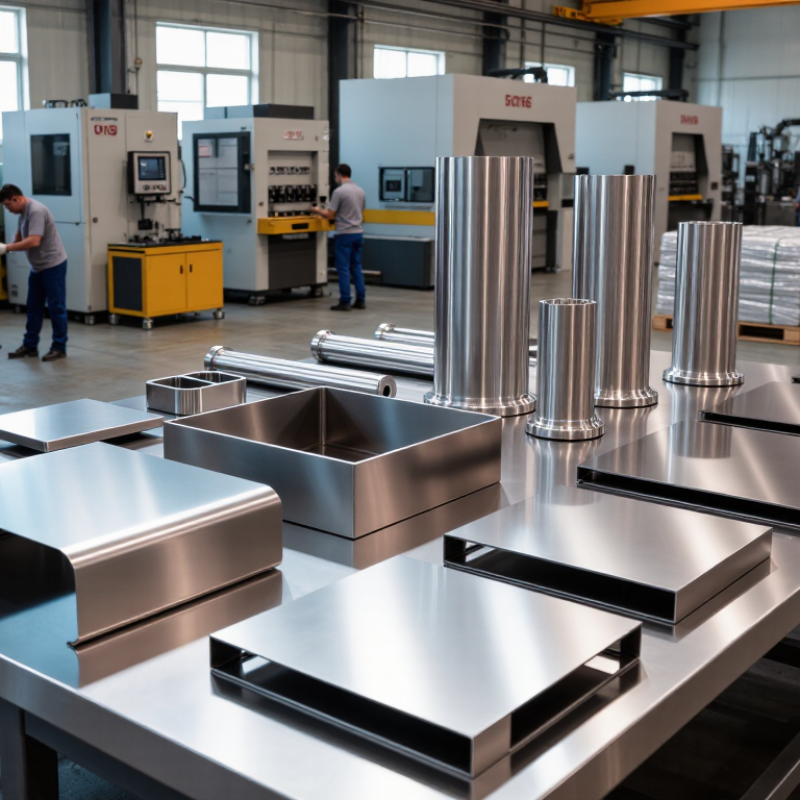
What Are the Best Stainless Steel Fabricators in China?

Understanding Stainless Steel Fabrication in China

Understanding Stainless Steel Fabrication in China

China is a major center for stainless steel fabrication. World Stainless reported global crude stainless steel production of about 58.4 million tonnes in 2023. China contributed approximately 36.7 million tonnes, or nearly 63% of the total. This scale supports wide access to sheet, tube, bar, laser cutting, and precision forming services. However, high production volume does not automatically mean consistent fabrication quality.

Quality Control Across the Process

A capable fabricator should control the complete process. Material certificates should identify the grade, heat number, and chemical composition. Positive material identification can help verify 304 or 316 stainless steel before cutting. Laser cutting, press-brake forming, TIG welding, and mechanical polishing require separate inspections.

Inspection and Surface Requirements

Welds need visual checks, dimensional checks, and suitable passivation. Surface roughness also matters in food, medical, and architectural applications. ISO 9001 certification shows a management system, not perfect workmanship. That distinction is easy to miss.

China’s stainless steel supply chain is efficient, but quality can vary between workshops. A factory visit helps reveal storage conditions, calibration records, and actual inspection habits. I would request sample parts before approving mass production. Photographs are useful, but they cannot replace measurement reports. World Stainless statistics describe production scale, not individual reliability. Some procurement decisions still rely too heavily on price. That is a weakness worth reconsidering.
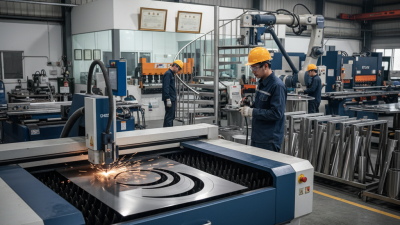
Key Criteria for Evaluating Chinese Stainless Steel Fabricators

What Are the Best Stainless Steel Fabricators in China?

Choosing a capable Chinese stainless steel fabricator requires more than comparing quotations. Start by checking experience with your specific product, alloy, thickness, and finishing requirements. A workshop producing food-grade tanks needs different controls than one making architectural panels. Ask for recent project samples, dimensional records, and material certificates. Inspect whether certificates match the supplied heat numbers. Small details matter.

Production capability should be visible, not merely promised. Review cutting, bending, welding, polishing, and inspection equipment. Skilled fabricators should explain weld procedures, surface grades, tolerances, and correction methods clearly. During factory visits, look for organized material storage and traceable production labels. Clean floors do not prove quality, but poor organization can reveal weak control. I have found that rushed answers often deserve a second question. No supplier is perfect.

Tips: Request a sample before placing a large order. Compare its weld appearance, edge treatment, flatness, and packaging protection. Confirm inspection stages in writing, including checks before shipping. Ask how the factory handles nonconforming parts and design changes. A practical supplier will provide measurable answers, not vague assurances. Also verify communication speed, because delayed clarification can create expensive fabrication errors.

What Are the Best Stainless Steel Fabricators in China?

Key evaluation criteria include material knowledge, grade traceability, welding capability, dimensional control, and compliance with applicable standards. The chart below compares the ASTM A240 minimum tensile-strength requirements for stainless steel grades commonly specified in fabrication projects.

Reference data: ASTM A240/A240M minimum tensile-strength requirements. Actual performance depends on product form, heat treatment, welding procedure, inspection, and certification.

Leading Types of Stainless Steel Fabricators and Their Capabilities

China’s stainless steel fabricators usually fall into several capability groups. Sheet-metal workshops handle laser cutting, bending, welding, and enclosure assembly. Precision CNC suppliers produce tight-tolerance parts for pumps, instruments, and food-processing equipment. Architectural fabricators focus on handrails, façades, kitchen systems, and visible finishes. Process-equipment specialists build tanks, heat exchangers, and sanitary pipe assemblies. Each type requires different machinery, inspection methods, and engineering depth.

Scale matters, but it does not prove capability. The World Stainless Association reported approximately 58.4 million tonnes of global stainless crude steel production in 2023, with China contributing about 36.2 million tonnes. This large supply base supports strong material access and competitive fabrication capacity. However, buyers should request heat-number traceability, welding procedure qualifications, dimensional reports, and surface-finish samples. Small details matter. A polished sample cannot replace documented testing.

Integrated fabricators often combine material sourcing, cutting, forming, welding, machining, and final inspection. This can reduce handling errors and shorten lead times. Specialized workshops may deliver better results for complex tolerances or demanding finishes. ISO 9001 certification helps structure quality control, but it does not guarantee every weld or measurement. That assumption needs testing. Review recent inspection records, confirm equipment calibration, and inspect a production sample before approving a large order. Reports provide useful market context, yet supplier verification remains an on-site responsibility.

What Are the Best Stainless Steel Fabricators in China? - Leading Types of Stainless Steel Fabricators and Their Capabilities

Fabricator Type Typical Products Common Stainless Steel Grades Typical Material Thickness or Size Core Capabilities Common Finishes Relevant Standards and Quality Controls
Custom Sheet Metal Fabricators Enclosures, cabinets, panels, brackets, covers, trays and equipment housings 304/304L, 316/316L, 430 Approximately 0.8–6 mm sheet; larger thicknesses may be handled through plate-fabrication equipment CNC laser cutting, turret punching, CNC bending, welding, tapping, riveting and assembly 2B, brushed No. 4, hairline, bead-blasted and powder-coated surfaces where appropriate Dimensional inspection, weld inspection, material certificates and RoHS or REACH documentation when required
Precision Laser and CNC Fabricators Precision brackets, machine parts, flanges, prototypes and repeat-production components 304/304L, 316/316L, 17-4 PH and selected ferritic grades Thin sheet and plate commonly from approximately 0.5–20 mm, depending on laser equipment and part geometry Fiber-laser cutting, CNC milling, CNC turning, countersinking, deburring and tight-tolerance production Mill finish, brushed, electropolished or passivated surfaces GD&T-based inspection, CMM measurement, first-article inspection and batch traceability
Sanitary and Hygienic Fabricators Food-processing equipment, pharmaceutical vessels, cleanroom furniture, tanks and sanitary pipe assemblies 304L and 316L, with 316L widely selected for higher corrosion resistance Commonly 1.5–8 mm sheet or plate; tubing sizes vary by process requirements Orbital or TIG welding, sanitary tube bending, crevice reduction, internal polishing and hygienic assembly Ra-controlled internal polishing, typically with smooth brushed or polished external surfaces Weld-borescope checks, surface-roughness testing, passivation and applicable 3-A, EHEDG or ASME BPE requirements
Structural and Architectural Fabricators Railings, stairs, façades, canopies, screens, frames, bollards and decorative stainless-steel structures 304/304L for general environments; 316/316L for coastal or chloride-exposed locations Typical sheet and plate thicknesses of 1.5–12 mm; profiles and tubes are selected according to structural design Profile cutting, tube laser processing, forming, TIG or MIG welding, polishing and site-installation support No. 4 brushed, hairline, mirror-polished, bead-blasted and colored stainless-steel finishes Welding procedure control, load calculations, dimensional surveys and project-specific building-code compliance
Pressure Vessel and Process Equipment Fabricators Storage tanks, mixing vessels, heat-exchanger components, skids and process piping 304L, 316L, 321 and other grades specified by temperature and corrosion conditions Usually medium-to-heavy plate; thickness is engineered according to pressure, temperature and vessel diameter Plate rolling, submerged-arc or TIG welding, nozzle fabrication, internal polishing and pressure testing Pickled and passivated, mechanically polished or electropolished internal surfaces ASME Section VIII, EN 13445, PED-related documentation, radiographic or ultrasonic testing and hydrostatic testing where applicable
Tube and Pipe Fabricators Sanitary tubing, exhaust components, manifolds, pipe spools, frames and fluid-handling assemblies 304/304L, 316/316L, 321 and selected duplex grades Small-bore tubing through large-diameter pipe; wall thickness depends on pressure and service conditions Tube laser cutting, mandrel bending, end forming, orbital welding, flange welding and leak testing Mill finish, brushed, pickled and passivated, polished or electropolished ASTM or EN material verification, weld documentation, dimensional checks and hydrostatic or pneumatic testing when specified
Automotive and Industrial OEM Fabricators Exhaust parts, battery-system components, machine frames, guards, brackets and production assemblies 304, 409, 439, 316L and precipitation-hardening grades for selected applications Thin sheet, tube and precision-machined parts; production size depends on tooling and automation Progressive stamping, robotic welding, laser cutting, resistance welding, machining and automated assembly Mill finish, brushed, passivated, heat-resistant or application-specific coated surfaces ISO 9001 quality systems, PPAP or FAI documentation, capability studies and statistical process control
Small-Batch Prototype and Job-Shop Fabricators Prototype parts, replacement components, engineering samples and low-volume custom assemblies 304/304L, 316/316L, 17-4 PH and other grades selected from customer drawings Broad range of sheet, plate, bar and tube sizes, subject to available machinery and subcontracting capacity Design-for-manufacturing feedback, rapid quotation, laser cutting, machining, bending, welding and finishing coordination Brushed, polished, bead-blasted, passivated, blackened or unfinished industrial surfaces Drawing review, material certificates, sample approval, dimensional reports and change-control procedures

Note: Capabilities, tolerances, available grades and certification scope vary by facility. Final selection should be based on the approved drawing, material specification, required surface finish, production volume, inspection plan and applicable industry standards.

How to Compare Quality, Certifications, and Production Standards

Choosing the best stainless steel fabricator in China requires more than comparing prices.

Quality begins with material control. Ask for heat numbers, mill test certificates, and positive material identification records. These documents should match the actual coils, plates, or tubes used in production. A reliable factory also checks chemical composition, tensile strength, hardness, and surface condition.

Certifications deserve careful review. ISO 9001 suggests a structured quality system, but it does not guarantee perfect products. Match the fabricator’s certificates with your required standards, such as GB/T, ASTM, or EN specifications. Check the certificate number, issuing body, scope, and expiry date.

Production standards should cover welding procedures, operator qualifications, dimensional tolerances, pickling, passivation, and final inspection. Request sample inspection reports with measurable results, not vague claims. A polished showroom can mislead.

Tips: Visit the workshop if possible. Observe clean material storage, clear batch labels, calibrated instruments, and controlled welding areas. Ask how rejected parts are recorded and corrected. Confirm whether inspectors work independently from production staff. Review a small trial order before approving larger volumes. Even experienced buyers sometimes trust paperwork too quickly. That mistake is worth remembering. A strong supplier welcomes difficult questions and explains weaknesses honestly. Reliability appears in consistent records, stable processes, and products that still meet specifications after repeated inspections.

Selecting the Right Stainless Steel Fabricator for Your Project

Choosing the right stainless steel fabricator in China requires more than comparing prices. Your project may need precise cutting, clean welding, polished surfaces, or dependable outdoor performance. Define these requirements before requesting quotations.

Ask each fabricator about material grades, thickness tolerances, welding methods, and surface treatment. A qualified team should explain when to use 304 or 316 stainless steel. Request mill certificates and inspect sample parts before approving production. Small samples can reveal weld discoloration, sharp edges, uneven polishing, and poor dimensional control.

Check the fabricator’s equipment and production experience. Laser cutters, bending machines, and calibrated inspection tools can improve consistency. However, modern equipment does not guarantee careful workmanship. Review inspection records, packaging methods, and corrective-action procedures. Factory videos help, but an independent audit provides stronger evidence.

Communication matters greatly. Confirm drawings, tolerances, finish standards, delivery terms, and change-control procedures in writing. Ask who handles technical questions during production. A responsive engineer can prevent expensive misunderstandings. Do not accept vague promises such as “high quality” without measurable standards.

Cost deserves careful attention. The lowest quotation may exclude testing, protective film, tooling, or export packaging. That mistake becomes expensive later. Compare complete offers instead of unit prices alone. No checklist is perfect. Recheck critical dimensions and surface requirements before shipment, especially when the parts will be visible or installed in demanding environments.

Contact Us