China’s robotic welding cell market has moved beyond simple robot integration. Leading manufacturers now combine welding robots, positioners, fixtures, sensors, safety systems, and production software. This makes supplier selection more complicated than comparing machine prices.
Joseph Engelberger, widely known as the father of industrial robotics, once said, “I can’t think of any more appropriate use of robots than in the manufacture of automobiles.” His observation remains relevant to welding production, where repeatable movement, stable arc control, and reduced worker exposure can improve daily operations. Yet automation is not automatically efficient. Poor fixture design can still create defects, delays, and expensive rework.
This guide examines China’s top robotic welding cell manufacturers through practical and technical criteria. It considers welding accuracy, robot brands, payload capacity, cell layout, programming support, safety design, and after-sales service. It also looks at applications for steel structures, construction machinery, automotive parts, pressure vessels, and fabricated frames.
Real evaluation requires more than a polished showroom video. Buyers should request sample welds, cycle-time records, material compatibility details, and references from similar factories. A factory visit can reveal cable protection, fixture rigidity, operator access, and maintenance habits. Small details matter.
No ranking is perfect. Public information can be incomplete, and some supplier claims need independent verification. That uncertainty deserves attention. The strongest manufacturers are not always the cheapest; they are the companies that can deliver stable welding quality, practical integration, and responsive technical support over many production years.
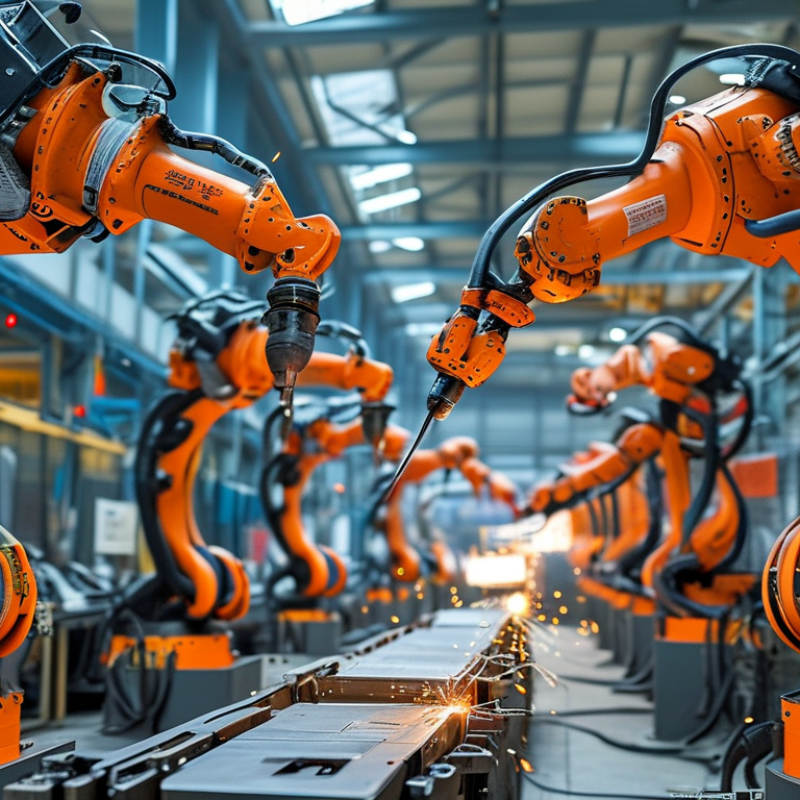
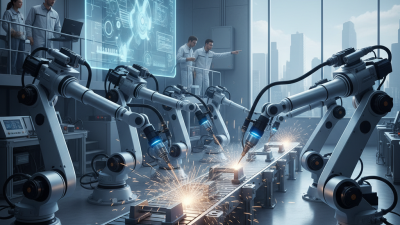
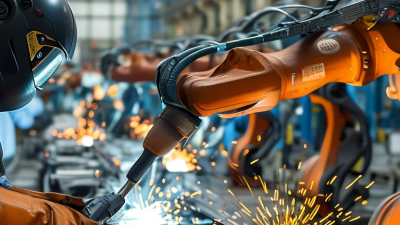
A robotic welding cell is an enclosed production system that uses an industrial robot to join metal parts repeatedly. It normally includes a robotic arm, welding power source, positioner, fixtures, sensors, guarding, and control software. The fixture holds each workpiece in the same position, while the positioner turns it for better torch access. This arrangement creates stable weld paths and reduces unnecessary manual handling.
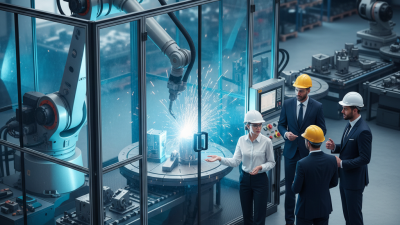
In a typical cycle, an operator loads steel components into the fixture and starts the program. The robot checks its programmed path, moves the torch, and applies heat along the joint. Sensors may monitor arc conditions, wire feeding, or part position. Fume extraction is also essential. Without it, the cell may meet production targets but create an unhealthy workspace. Safety doors, light curtains, emergency stops, and controlled access require careful engineering.
When comparing top robotic welding cell manufacturers in China, buyers should examine integration experience, welding quality, programming support, maintenance response, and documented safety practices. A low purchase price can become expensive when fixtures wear quickly or technicians cannot adjust the system. Not every automated cell fits every factory. That assumption often fails. Small batches may need flexible tooling, while high-volume lines may benefit from dedicated fixtures and faster cycle times. Trial welding, sample inspection, and operator training provide more reliable evidence than brochures alone. A practical review should include weld penetration, distortion, changeover time, and actual production records.
A robotic welding cell combines an industrial robot, welding power source, positioner, fixtures, sensors, safety guarding, and a controller. The chart shows the estimated number of completed assemblies during an 8-hour shift at different welding cycle times. Values are calculated using 85% operational availability and exclude breaks, material loading, and maintenance beyond the stated availability.
Shorter cycle times generally increase production capacity, while actual output depends on weld length, fixture changes, part variation, operator loading, inspection requirements, and cell utilization.
China’s robotic welding industry is organized around several manufacturing layers, not a single group of top suppliers. Large system integrators design complete welding cells for automotive, construction machinery, steel furniture, and heavy equipment. They combine robots, positioners, welding power sources, sensors, safety fencing, and production software. Their strength is project integration.
Specialized manufacturers focus on one essential part. Some produce robotic arms, while others build welding fixtures, motion platforms, or seam-tracking systems. Smaller engineering companies often adapt these components for narrow production needs. A cell for truck frames may require a long rail and dual positioners. A cell for small metal cabinets may need compact tooling and rapid changeovers.
Regional clusters also shape the industry. Coastal manufacturing areas usually offer stronger supply chains and faster access to machining, electrical controls, and technical labor. Inland suppliers may provide lower project costs, but service response can vary. Factory audits should examine sample welds, fixture repeatability, software documentation, and spare-part availability. Ask to see a running cell, not only a polished showroom.
Price remains important, but it can hide weak integration work. A low-cost cell may require more operator adjustment than expected. That is a practical concern. Technical specifications can also be incomplete, especially for difficult materials or changing joint designs. Buyers should compare cycle time, arc-on time, training support, and acceptance testing. The best manufacturer depends on process stability, service capability, and honest engineering communication.
China’s robotic welding cell market is led by manufacturers that combine robot hardware, welding power sources, sensing, and production software. According to the International Federation of Robotics’ World Robotics 2024 report, China installed 276,288 industrial robots in 2023, representing more than half of global installations. This scale has pushed domestic suppliers toward faster integration and lower maintenance costs.
The strongest manufacturers usually serve automotive parts, steel structures, construction machinery, and energy equipment. Industry estimates from GGII’s 2024 robotics research indicate that welding applications remain one of China’s largest robot-use segments, especially for repetitive arc-welding tasks. Market leaders tend to offer modular cells, automatic seam tracking, positioners, offline programming, and local service teams. Practical tests matter. A cell may look impressive in a showroom, yet struggle with spatter, fixture errors, or uneven steel thickness.
Reliable suppliers also provide cycle-time records, weld-quality data, safety documentation, and operator training. The best evaluation checks uptime over several weeks, not only demonstration speed. This is where some rankings become uncertain. Public reports often measure shipments, while manufacturers may emphasize project value or installed capacity. Buyers should compare delivered cells, after-sales response, integration depth, and performance on their own materials. Numbers can mislead. A smaller integrator may outperform a larger supplier on a difficult, low-volume welding line.
| Evaluation Dimension | Typical Industry Benchmark | What Leading Chinese Suppliers Commonly Provide | Reference Basis |
|---|---|---|---|
| Primary Welding Processes | GMAW/MAG, FCAW, GTAW and resistance spot welding | Robotic cells are commonly configured for carbon steel, stainless steel and aluminum fabrication. MAG/GMAW is widely used for continuous arc welding because it supports high deposition rates and automated wire feeding. | ISO 4063 welding process classifications |
| Robot Payload | Approximately 6–20 kg for many arc-welding applications | The payload normally covers the welding torch, cable package, wire-feeding equipment and related tooling. Higher payload configurations may be selected for heavy torches, positioners or specialized welding equipment. | Application-dependent engineering range |
| Robot Working Reach | Approximately 1.4–2.1 m for many standard arc-welding cells | Suppliers typically offer multiple arm sizes and can extend the working envelope with linear tracks, overhead axes, external positioners or synchronized motion systems. | Typical industrial robot configuration range |
| Position Repeatability | Commonly specified within approximately ±0.02–±0.08 mm, depending on robot class | Repeatability is important for maintaining torch-to-workpiece consistency. Actual results depend on robot model, installation quality, payload, joint condition and test method. | ISO 9283 performance testing principles |
| Welding Current Capacity | Often configured from about 200 A to 500 A for industrial arc-welding cells | The appropriate current range depends on material thickness, wire diameter, welding process, duty cycle and required penetration. Heavy fabrication may require higher-capacity power sources. | Process and workpiece dependent |
| Welding Positioners | One-axis, two-axis and multi-axis positioners are widely used | Positioners can rotate or tilt the workpiece to improve welding access, reduce non-welding time and keep the joint in a favorable welding position. Rated load and allowable inertia must match the workpiece. | Cell layout and workpiece engineering requirements |
| Seam-Finding Technology | Touch sensing, through-arc sensing and laser vision are common options | Seam tracking helps compensate for fixture variation, thermal distortion and part-positioning error. Laser-based systems provide non-contact measurement, while touch and through-arc methods are often used for cost-sensitive applications. | Industrial robotic welding practice |
| Programming and Simulation | Offline programming, teach pendants and CAD-based path generation | Advanced suppliers generally support welding parameter libraries, digital cell simulation, collision checking, path optimization and production data collection to reduce commissioning time. | Manufacturing engineering and automation practice |
| Cell Safety Design | Physical guarding, interlocked access doors, emergency stops and safety-rated control functions | A complete cell should include risk assessment, controlled access, safe restart logic, welding-arc protection, fume management and safeguards for robot motion and external axes. | ISO 10218-1, ISO 10218-2 and ISO 13849-1 |
| Welding Fume and Arc Protection | Local exhaust ventilation and suitable optical protection | Cells are commonly equipped with extraction hoods or integrated fume-extraction systems, light curtains or guarded enclosures, and welding curtains or panels selected for the process and workspace. | Occupational safety and welding-fume control practice |
| Power and Utility Compatibility | Three-phase industrial power; 380 V/50 Hz is widely used in mainland China, subject to site confirmation | The final utility design must verify voltage, frequency, grounding, compressed-air quality, shielding-gas supply, cooling requirements and total connected load before installation. | Chinese industrial facility practice; project-specific verification required |
| Control-System Integration | PLC, HMI, safety controller and industrial communication interfaces | Robotic welding cells may integrate with conveyors, fixtures, positioners, barcode systems, MES platforms and quality databases through industrial Ethernet or other plant communication protocols. | Factory automation integration practice |
| Quality Monitoring | Monitoring of current, voltage, wire feed speed, gas flow and welding time | Leading system integrators increasingly provide parameter traceability, alarm records, weld-cycle logging and optional inspection using cameras, laser sensors or non-destructive testing equipment. | ISO 3834 quality-management principles |
| Production Flexibility | Designed for repeat production, batch production or mixed-model manufacturing | Flexible cells may use quick-change fixtures, recipe-based welding programs, automatic torch cleaning, wire cutting, nozzle reaming and multiple workpiece stations to reduce changeover time. | Automated production-line practice |
| Typical Application Sectors | Automotive components, construction machinery, steel structures, agricultural equipment, boilers and metal furniture | The best cell configuration varies by component size, joint geometry, material, batch volume, takt time and required weld-quality class. A proven application portfolio is therefore an important supplier-selection criterion. | Common industrial robotic-welding applications |
| Supplier Selection Criteria | Technical capability, integration experience, delivery record and lifecycle support | Buyers should compare welding demonstrations, cycle-time validation, fixture design, programming capability, spare-parts availability, operator training, preventive maintenance and local after-sales service. | Industrial automation procurement practice |
| Market Leadership Indicators | Verified installations, repeat customers, engineering depth and documented performance | Rather than judging suppliers only by robot price, purchasers should assess complete-cell performance, weld consistency, uptime, commissioning quality, integration capability and measurable return on investment. | Total-cost-of-ownership evaluation |
What Are China Top Robotic Welding Cell Manufacturers?
Modern Chinese welding cells are shaped by automation, sensing, and data. Leading manufacturers now combine six-axis robots with laser seam tracking and machine vision. These systems identify joint variations before the torch reaches the workpiece. Precision starts here. Digital twin software also tests reach, cycle time, and collision risks before installation. This reduces expensive adjustments on the shop floor. Modular fixtures support faster product changes, especially in automotive, steel furniture, and machinery production. However, fixture rigidity still matters. A smart robot cannot correct unstable positioning forever.
Adaptive welding control is becoming more practical. Sensors can monitor arc voltage, wire position, and heat input during production. Industrial networks then send performance data to maintenance teams. This helps engineers detect contact-tip wear or unusual weld patterns earlier. Safety PLCs, light curtains, and guarded access improve controlled operation. Reliable manufacturers also provide process documentation, operator training, and acceptance testing. These details show technical maturity. Yet integration quality varies, even among experienced suppliers. A cell may look advanced while its software remains difficult to adjust. That weakness deserves honest review.
Tips: Ask for sample welds using your actual materials and joint designs. Check how quickly operators can change fixtures and programs. Request cycle-time evidence, maintenance records, and training plans. Watch the cell during a full production shift, not only a demonstration. Small errors spread. Leave room for manual inspection, because automation should support judgment, not replace it.
Comparing China’s robotic welding cell manufacturers requires more than checking robot payload or quoted price. According to the International Federation of Robotics’ World Robotics 2024 report, China installed 276,288 industrial robots in 2023. That represented about 51% of global installations. This scale creates strong manufacturing experience, but supplier quality still varies.
Review each manufacturer’s welding evidence. Ask for videos showing your actual steel grade, joint design, weld position, and cycle time. Examine arc stability, seam tracking, fixture repeatability, fume extraction, and offline programming. Request measured data, not impressive claims. A reliable supplier should provide uptime assumptions, maintenance intervals, spare-part lead times, and documented acceptance tests. Total cost matters more than the initial quotation. Integration errors can erase a low purchase price quickly.
Tips:
Compare three complete proposals using one technical checklist. Require sample welds and destructive testing where appropriate. Confirm compliance with applicable machine-safety and electrical standards in your market. Inspect the factory if possible. Look at cable routing, guarding, teach pendants, and operator access. These details reveal engineering discipline. One weakness remains: published case studies often show ideal conditions. They may hide changeover delays or rejected welds. Therefore, include a trial run with production-like fixtures and materials. Ask who responds when the cell stops at 2 a.m. A polished demonstration is not proof of dependable service.
Contact Us
Pemamek Ltd